
'The number of airport bundles that may be awarded to a single bidder would be capped.'

India's fertiliser ministry has introduced a new analytical tool and a national-to-retail dashboard to monitor fertiliser dispatches, movement, and inventories in real time, aiming to prevent localised shortages and ensure equitable access for farmers.

Indian refiners are diverting 350,000 tonnes of sugar, originally slated for export, to the domestic market to ease a supply crunch and stabilise prices ahead of the festive season.

The Centre has launched dedicated Kanda Express onion trains from Nashik to major cities, releasing buffer stocks at 35/kg to curb a sharp seasonal rise in onion prices.

Mumbai-based TCR Engineering Services has become the first independent company in India to receive Nadcap accreditation for materials testing at its Navi Mumbai and Vadodara laboratories, a crucial step for Indian suppliers to enter the global aerospace supply chain.

Prices had started to ease following the government's decision to allow duty-free imports of 1 mt of raw sugar and would weaken further over the next 7 to 10 days.

India is set to import 1 million tonnes of raw sugar at zero duty after domestic stocks fell sharply and prices surged ahead of the festival season.

The Federation of Indian Pilots has requested the DGCA to increase random drug testing for pilots, aiming to enhance aviation safety.

The pilots testing positive have been removed from duty, with their samples sent for confirmatory testing.
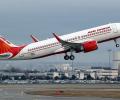
Air India Group has accumulated losses of about Rs 47,821 crore since its takeover, leaving its prolonged transformation among the biggest unfinished projects of N Chandrasekaran's tenure.

The Central government has approved an additional Rs 1,000 crore for electric two-wheelers (e2w) under the PM Electric Drive Revolution in Innovative Vehicle Enhancement (PM E-DRIVE) scheme, extending incentives for the segment until March 2028.

The Ministry of Heavy Industries (MHI) anticipates disbursing approximately 4,700 crore in incentives under the automotive PLI scheme in FY27, more than double the previous two years, while also exploring financing mechanisms for electric buses and trucks and promoting domestic manufacturing of critical EV components.
The Airports Authority of India has received a request for a waiver from contractual restrictions that prevent airport concessionaires and their group entities from holding equity in scheduled airlines, Minister of State for Civil Aviation Murlidhar Mohol confirmed in the Rajya Sabha. This comes amid reports of the Adani group's interest in the airline business, despite their denial.

=The investigation is examining the circumstances surrounding the aircraft's sudden altitude variation and the actions of the flight crew.

Why the industry's public position changed is difficult to say. What the developments did establish, though, is that ethanol-blended petrol has become one of the country's most politically and commercially sensitive policy issues.

BMW India CFO Carsten Lammers has expressed surprise at the extensive scale and prolonged duration of tax and Customs litigation in India, advocating for faster dispute resolution and simpler procedures to ensure business stability.

Maruti Suzuki India's CFO, Arnab Roy, has urged the central government to introduce an amnesty scheme or an 'as-is' settlement option to resolve past indirect tax disputes, aiming to clear legacy litigation and foster growth in the automotive industry. Roy emphasised the need for a 'smarter way to address the past' to provide long-term certainty for businesses.

The move comes days after the Delhi police said false information linked to the recent students' protest was being circulated through fake social media posts.
Maruti Suzuki India (MSIL) reported a 9.1 per cent year-on-year decline in net profit for the April-June quarter of 2026-27, marking its second consecutive quarterly fall. This dip occurred despite a significant 29.3 per cent jump in sales volume, primarily due to escalating commodity prices, increased energy costs, and logistics disruptions stemming from the West Asia conflict.
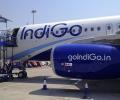
IndiGo Managing Director Rahul Bhatia has stated that the airline has 'taken all the necessary steps' to learn from the operational disruption faced in December last year, while outlining a long-term vision focused on customer trust, international expansion, and establishing India as a global aviation hub.
